
Menu



With growing pressure from clients, regulators, and investors to lower embodied carbon and improve building performance, project teams are looking closely at the materials they specify.
Concrete often attracts criticism for its carbon footprint, but advances in low-carbon cement technology, efficient manufacturing, and prefabrication methods mean modern concrete—particularly precast panels—can play a key role in delivering more sustainable commercial buildings.
At Homestead, we actively use low-carbon cement in our precast panel manufacturing, helping clients reduce embodied emissions while still achieving the durability, speed, and quality that commercial projects demand.
Because of that, reducing concrete’s carbon footprint is important both for embodied carbon (emissions associated with manufacturing, transporting, and constructing materials) and for operational carbon (emissions produced over a building’s life through heating, cooling, lighting, and maintenance) plus end-of-life / reuse / recycling etc.
Traditional cement production is energy-intensive, but new formulations can significantly reduce emissions by:
By specifying low-carbon cement in our precast panels, we help lower the embodied carbon of commercial developments without compromising structural performance or longevity—an important factor for warehouses, industrial buildings, retail centres, and office developments across New Zealand.
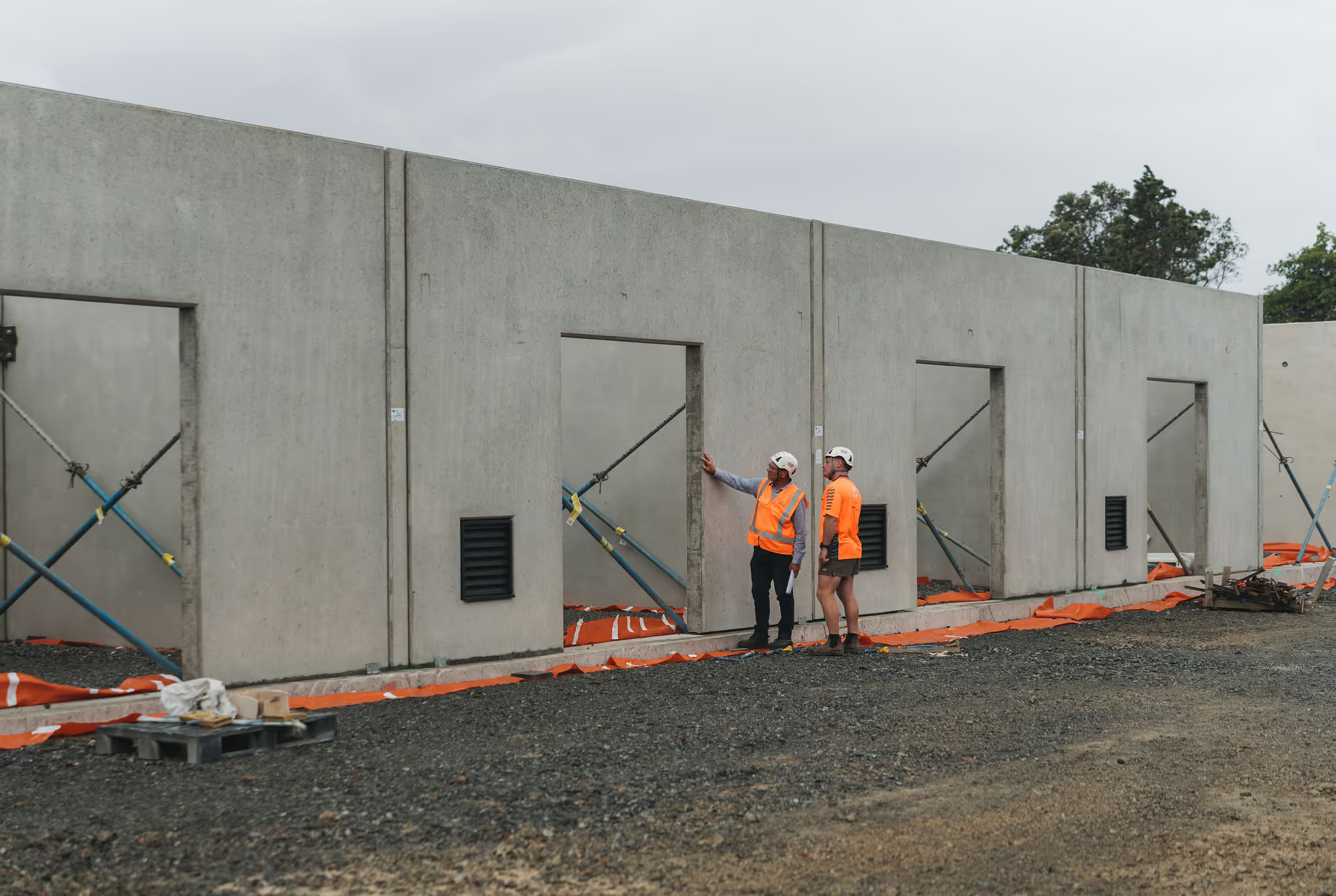
Precast concrete panels are manufactured in a controlled factory environment and transported to site for installation. This approach offers several sustainability advantages:
1. Reduced Waste
Factory production allows precise batching and reuse of materials, dramatically reducing construction waste compared to traditional in-situ pours.
2. Faster Construction = Lower Site Emissions
Precast systems speed up build programmes, which means fewer weeks of machinery operation, reduced vehicle movements, and lower overall site energy use.
3. Improved Quality and Durability
High-quality manufacturing leads to longer-lasting structures with reduced maintenance requirements—extending building life is one of the most effective ways to lower whole-of-life carbon impact.
4. Thermal Performance
Concrete’s thermal mass can stabilise indoor temperatures, reducing heating and cooling loads when designed correctly – supporting lower operational emissions over time.
5. Carbon Uptake / Re-carbonation
Exposed surfaces of hardened concrete will immediately begin absorbing atmospheric carbon dioxide in a natural process called “carbon uptake”. Over time at least 15% of the original emissions from cement production are taken up in concrete.
Precast concrete is particularly well-suited to New Zealand’s commercial and industrial landscape. Its strength and resilience align with seismic design requirements, while its versatility allows for architectural finishes that suit everything from logistics hubs to retail developments.
When combined with thoughtful design, efficient building services, and renewable energy strategies, low-carbon precast systems can make a meaningful contribution toward Green Star, Homestar, and other sustainability targets.
The future of commercial construction in New Zealand is about building smarter, not just building more. Concrete—when produced responsibly and paired with modern precast techniques—can be part of the solution.
If you’re planning a commercial or industrial development and want to explore lower-carbon construction options, our team would be happy to discuss how low-carbon precast systems and integrated project management can support your sustainability objectives.
Better thinking in your inbox, join our list.