Menu
Warehouse ROI isn't just about rent. The best-performing developments balance cost, flexibility, tenant demand, and long-term value.



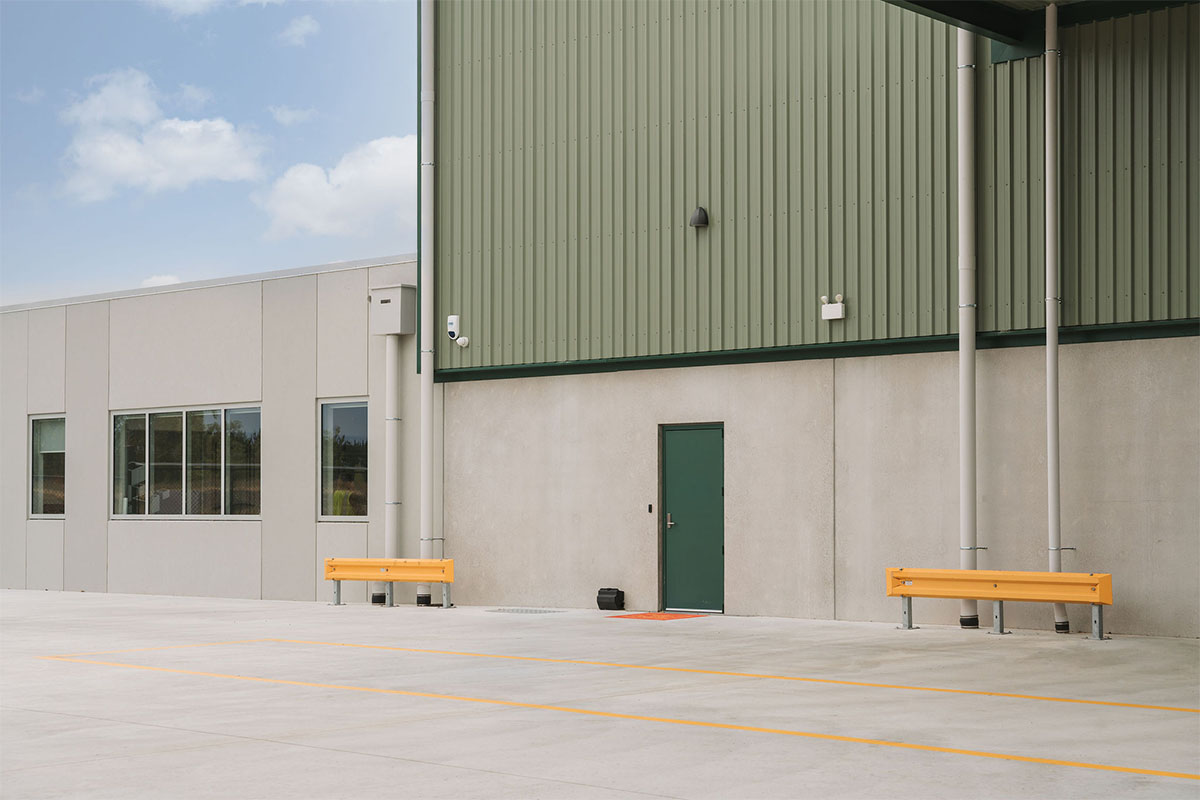
Industrial property continues to be one of New Zealand's strongest-performing commercial asset classes, attracting developers, investors and owner-occupiers seeking long-term returns. Strong rental demand, historically low industrial vacancy rates in many markets, and the continued growth of logistics and distribution have helped support warehouse investment activity across both metropolitan and regional centres.
However, before assessing a warehouse opportunity, it's important to understand how return on investment is calculated and how it differs from property yield or capitalisation rates.
Return on Investment (ROI) is a measure of how much return an asset generates compared to its total cost.
The basic formula is:
ROI (%) = Annual Net Income ÷ Total Project Cost × 100
For example:
• Land acquisition: $1,000,000
• Construction: $3,000,000
• Professional fees and development costs: $500,000
Total project cost = $4,500,000
If the completed warehouse generates $315,000 net rental income annually:
ROI = $315,000 ÷ $4,500,000 × 100 = 7.0%
This means the development is returning approximately 7.0% of its total development cost each year.
For developers, ROI is often one of the first indicators used to determine whether a project is financially viable.
ROI and cap rates are closely related but measure different things.
Development ROI measures the return generated against the total cost to acquire, develop and complete the asset.
It answers the question:
"Does this project stack up financially?"
A cap rate measures the relationship between a property's income and its market value.
Cap Rate (%) = Net Operating Income ÷ Property Value ×100
For example:
• Net income: $315,000
• Market value: $5,000,000
Cap Rate = 6.3%
It answers the question:
"What yield is an investor willing to accept for this asset?"
A warehouse may be developed for:
• Total cost: $4.5 million
• Market value upon completion: $5.0 million
• Net rental income: $315,000
The asset achieves:
• Development ROI of 7.0%
• Market cap rate of 6.3%
• Immediate development uplift of $500,000
This is where successful projects create value. The goal is often to develop at one yield and sell at a lower market yield.
One of the most common misconceptions is that city developments automatically deliver better returns because rents are higher.
The reality is more nuanced.
Auckland, Wellington and Christchurch typically offer:
• Higher rents
• Larger tenant pools
• Greater investor demand
• More transaction activity
• Stronger market liquidity
However, these benefits come with:
• Significantly higher land values
• Increased holding costs
• More competition
• Lower initial development yields
In many metropolitan markets, strong investor demand compresses yields and reduces the margin between development cost and completed value.
Regional centres such as Horowhenua, Kāpiti, Manawatū, Hawke's Bay and Bay of Plenty often present a different equation.
Benefits can include:
• Lower land acquisition costs
• Reduced development costs
• Less competition
• Strong local business growth
• Better affordability for owner-occupiers
In many cases, lower development costs can offset lower rental rates, resulting in comparable or sometimes superior development ROI.
Infrastructure improvements and improved transport connections are making regional locations increasingly attractive.
Businesses are asking:
• Why pay Auckland industrial land prices?
• Why operate from expensive urban premises?
• Could logistics and distribution functions be based closer to state highway networks at a lower cost?
For the regions, this trend is creating increased demand for:
• Distribution warehouses
• Trade supplier facilities
• Manufacturing premises
• Commercial storage
• Service industry depots
The challenge is ensuring there is sufficient tenant demand to support future occupancy.
Choosing the right location is one of the biggest factors affecting warehouse ROI. While major centres generally offer stronger tenant demand, regional markets can often deliver superior development economics.
Advantages
• Larger tenant pools and stronger leasing demand
• Higher rental rates
• Greater investor competition
• Easier resale and improved market liquidity
Challenges
• Higher land acquisition costs
• Increased competition from other developments
• More compressed yields and lower development margins
• Longer planning and consenting processes in some locations
Major city developments often benefit from stronger occupancy and capital growth, but higher costs can reduce overall development returns.
Advantages
• Lower land and holding costs
• Potentially higher development yields
• Less competition from new industrial stock (this may be time limited)
• Growing demand from businesses seeking more affordable operating locations
Challenges
• Smaller tenant pools
• Longer lease-up periods
• Lower rental rates
• Reduced liquidity when selling investment assets
While regions generally command lower rents than major cities, lower development costs can often offset this difference, resulting in comparable or even stronger ROI. The key is ensuring sufficient tenant demand, designing flexible buildings, and selecting locations with strong transport connections and long-term economic growth potential.
As a general rule, developers in major centres may accept lower initial yields in exchange for greater tenant depth and stronger future capital growth. Regional developments often target higher yields to compensate for leasing and liquidity risk.
This creates an important trade-off:
• Cities: Lower risk, lower yields, higher entry costs.
• Regions: Higher risk, higher yields, lower entry costs.
The most successful projects are those that align the development strategy with the characteristics of the local market, rather than applying a one-size-fits-all approach.
The strongest-performing warehouse developments are usually the easiest to lease.
Rather than designing for one specific business, successful projects typically accommodate a range of potential occupiers.
Features that improve flexibility include:
• Clear-span warehouse space
• Regular building shapes
• High stud heights
• Expandable office areas
• Multiple tenancy options
• Generous yard areas
A flexible warehouse significantly reduces vacancy risk, which is one of the biggest threats to long-term ROI.
Industrial tenants increasingly value outdoor operational areas.
Depending on the industry, tenants may require:
• Container storage
• Truck circulation
• Fleet parking
• Equipment storage
• Loading zones
In some developments, yard space can be just as important as the warehouse itself.
A well-planned site layout can increase rental demand without materially increasing construction costs.
Developers should also focus on future-proofing their assets.
Increasingly desirable features include:
• Higher stud heights
• Solar-ready roofs
• EV charging capability
• LED lighting
• Energy-efficient systems
• High seismic performance
• Low-maintenance materials
These features can improve tenant retention and enhance future asset value.
The Government's Investment Boost initiative introduced in Budget 2025 allows eligible businesses to claim an immediate deduction equal to 20% of the cost of qualifying new commercial and industrial buildings when first available for use. This can improve project cashflow and enhance investment metrics such as payback periods, return on capital employed project feasibility. Read more here.
Before design begins, developers should determine their likely exit strategy.
Is the project intended to:
• Be retained for long-term investment?
• Be sold to an owner-occupier?
• Be purchased by a private investor?
• Form part of a larger industrial portfolio?
The answer influences everything from building specification and lease structure through to site layout and future value.
Commercial warehouse ROI is not simply determined by rent levels. Successful industrial developments balance construction costs, land acquisition, tenant demand, vacancy risk and future saleability.
While Auckland, Wellington and Christchurch provide larger tenant markets and stronger investment liquidity, regional locations can often deliver comparable or even superior development returns through lower land costs and less competition.
For developers and business owners alike, the highest-performing projects are typically those designed to be flexible, efficient and adaptable to changing tenant requirements. In today's market, minimising vacancy risk is often far more important than minimising construction costs.
Better thinking in your inbox, join our list.